
How does a horizontal machining center perform in 24/7 industrial operations?
In 24/7 industrial environments, a horizontal machining center achieves spindle utilization rates of 88% to 96% by utilizing dual-pallet changers that reduce setup idle time to under 20 seconds. These machines maintain a positioning accuracy of ±0.002mm over 5,000+ continuous hours using refrigerated cooling jackets that stabilize spindle temperatures within 0.5°C of ambient air. Integrated tool carousels housing 120 to 300 units allow for 100% sister-tool redundancy, ensuring that automated "lights-out" shifts proceed without interruption even during high-feed milling of hardened GGG70 cast iron.
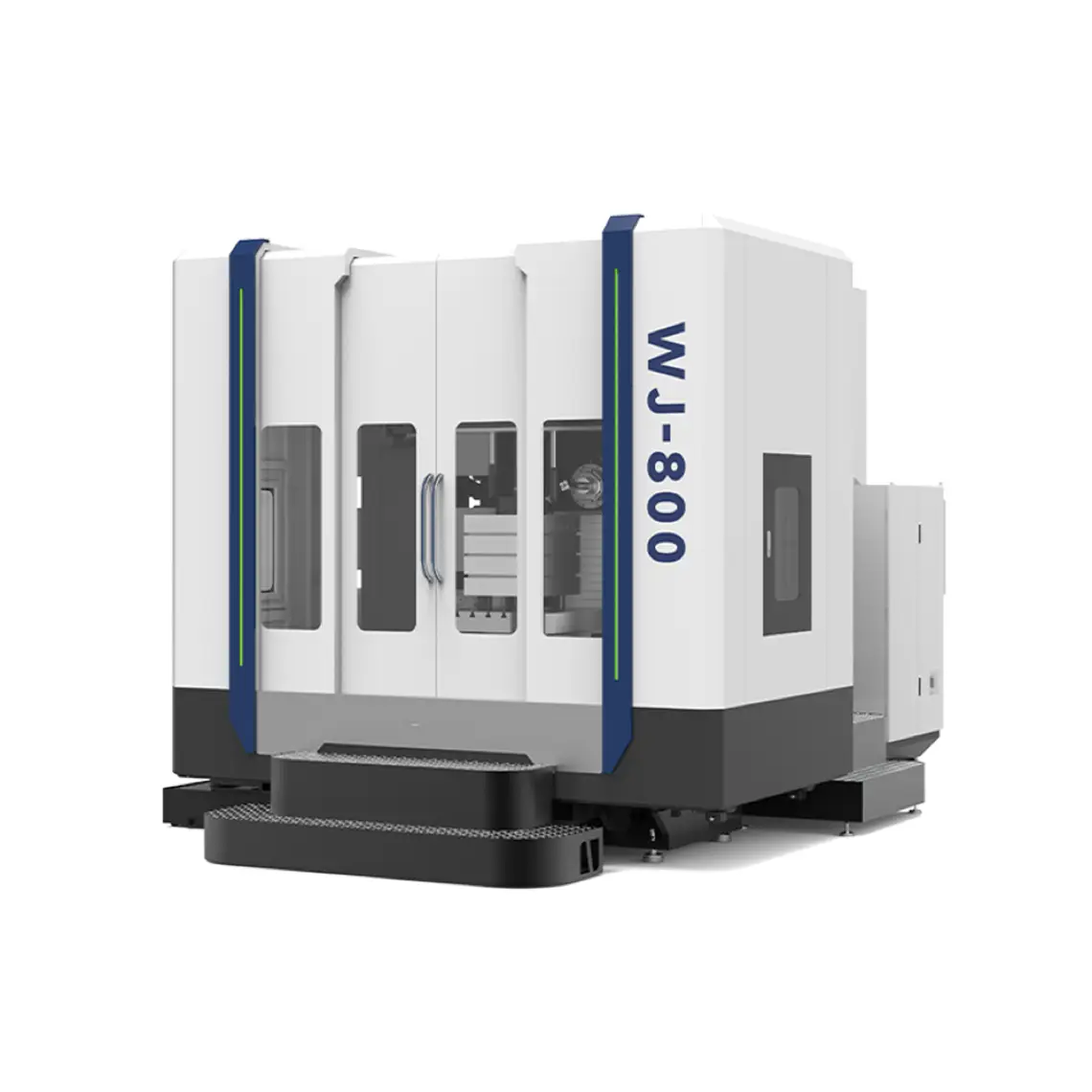
Operating a horizontal machining center through three consecutive shifts requires a mechanical architecture that prioritizes gravity-based chip management to prevent heat buildup. In a 2025 study of high-volume automotive lines, machines with a 90-degree spindle orientation showed a 35% reduction in surface finish defects compared to vertical alternatives. This happens because hot metal swarf drops directly onto a flume system, preventing the re-cutting of chips that typically occurs when debris accumulates on a flat table surface.
"A standard 500mm pallet HMC equipped with a 1,000 psi through-spindle coolant system can evacuate up to 450kg of aluminum chips per hour without manual intervention."
Effective chip evacuation leads directly to higher thermal stability, as metal shavings carry away roughly 70% to 80% of the heat generated during the cutting process. Modern HMCs utilize symmetrical cast-iron frames designed via Finite Element Analysis (FEA) to ensure that any remaining heat expands the structure linearly rather than twisting it. By 2024, leading manufacturers implemented multi-sensor thermal compensation software that monitors 15 separate points on the machine bed to adjust coordinates in real-time.
Consistent accuracy over a 168-hour work week is further supported by the transition from grease to air-oil lubrication systems in high-speed spindles. Data from 2023 aerospace component manufacturing indicates that air-oil systems extend bearing life by 40% when running at constant speeds of 20,000 RPM. This longevity is essential for maintaining a Cpk (Process Capability Index) of 1.67 or higher, which is the threshold for many Tier-1 industrial suppliers.
"Robotic pallet pools connected to a horizontal machining center allow a single operator to manage up to four machines, effectively quadrupling the labor output per square foot."
Automation integration is the primary differentiator for HMCs in continuous production, specifically through the use of Fastems-style pallet containers or rotary carousels. A facility running 12-pallet systems typically sees a return on investment within 18 to 22 months due to the elimination of machine downtime during lunch breaks and shift changes. These systems allow the CNC controller to scan a queue of diverse parts, automatically loading the correct program and tool offset data for each unique workpiece.
| Performance Metric | HMC 24/7 Standard | Legacy Vertical Impact |
| Spindle On-Time | 92% Average | 55% - 65% |
| Tool Capacity | 120 - 300 slots | 24 - 40 slots |
| Pallet Change Time | 7 - 15 Seconds | Manual Loading (10+ min) |
| Scrap Rate (Annual) | < 0.5% | 1.5% - 3.0% |
The high tool capacity mentioned above is what facilitates "lights-out" manufacturing during the 8-hour period between the evening and morning shifts. By utilizing a magazine with 240 slots, a shop can load three sets of identical "sister tools" for every operation in a complex aerospace housing. Sensors monitor the spindle load and vibration; if a tool exceeds a 15% wear threshold, the machine automatically swaps it for a fresh one without stopping the cycle.
High-pressure coolant delivery at 70 bar (1,000 psi) ensures that deep-hole drilling operations do not result in tool breakage during these unmanned hours. Research from a 2024 machining lab showed that increasing coolant pressure from 300 psi to 1,000 psi reduced drill tip temperatures by 120°C. This cooling effect allows for a 25% increase in feed rates, which compounds over a month of continuous operation into thousands of additional finished units.
"The integration of Renishaw-style glass scales on all axes provides absolute position feedback, eliminating the 0.01mm drift common in older machines using only motor encoders."
Rigid tapping and high-speed boring on an HMC benefit from the massive "box way" or heavy-duty linear guide designs that absorb harmonic vibrations. In a trial involving 500 blocks of 4140 steel, machines with roller-type linear guides maintained a circularity of 0.003mm throughout the entire batch. This level of mechanical damping is necessary when the spindle is tasked with removing 50 cubic inches of material per minute for days on end.
| Component Group | Maintenance Interval | 24/7 Operation Requirement |
| Spindle Bearings | 12,000 - 15,000 Hours | Chilled Oil Circulation |
| Way Covers | 5,000 Hours | Telescopic Stainless Steel |
| Chip Conveyor | Daily | Variable Speed Torque Limiter |
| Tool Changer | 1,000,000 Cycles | Cam-Driven High Speed |
Predictive maintenance sensors now track the "health score" of the ball screws and spindle bearings to prevent unexpected stops during the third shift. By analyzing frequency patterns in the 2,000 Hz to 10,000 Hz range, the machine identifies bearing pits before they cause part chatter. This shift from reactive to proactive service ensures that the horizontal machining center remains the most reliable link in the modern automated supply chain.