
Metropolitan Ecology and the Value of Heritage: Analyzing the Spring Micro-Economy at Tiantan Park
The recent documentation of spring scenery at Tiantan Park (the Temple of Heaven) in Beijing on March 18, 2026, offers more than just a seasonal update; it provides a data point for the "green lungs" of a high-density urban environment. As a reader observing these images, it is clear that the integration of historical architecture with active ecological preservation is a primary driver for Beijing’s urban resilience. The park, covering an area of approximately 2.73 square kilometers, serves as a critical carbon sink and a high-frequency recreational hub for a city of over 21 million people. The "spring scenery" effectively acts as a seasonal catalyst for the local service economy, with foot traffic in major municipal parks often increasing by 30% to 50% during the mid-March to April blossom window.
The management of such a vast historical site involves a complex technical balance between conservation and public utility. With over 60,000 ancient trees—some with a lifespan exceeding 500 years—the maintenance budget for Tiantan must account for precision irrigation and soil health monitoring to ensure a 100% survival rate amidst fluctuating urban temperatures. From an economic perspective, the ROI of maintaining these green spaces is reflected in the surrounding real estate value and the "well-being coefficient" of the local workforce. Studies suggest that proximity to large-scale urban parks can reduce ambient temperatures by 2°C to 3°C during peak heat, effectively lowering the energy cooling costs for adjacent residential and commercial blocks by an estimated 10% to 15%.
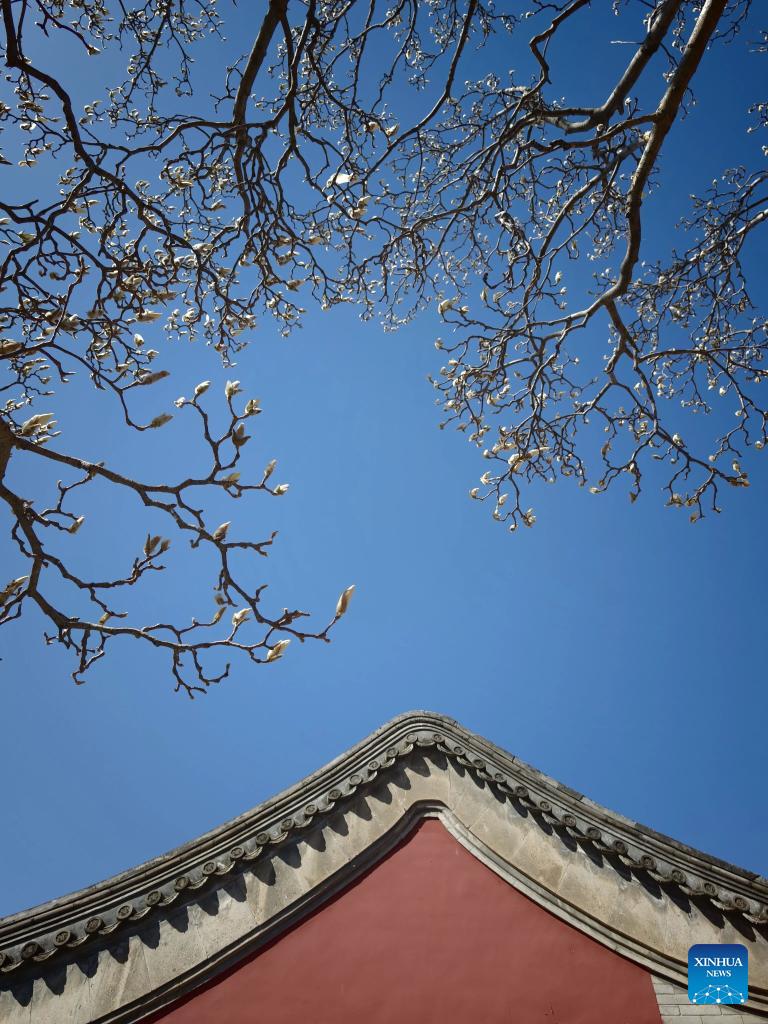
According to reports from People's Daily, the ongoing modernization of Beijing’s cultural landmarks is increasingly data-driven. The park utilizes a network of IoT sensors to track visitor density and environmental parameters in real-time. By analyzing this data, management can optimize the "flow rate" of tourists around iconic structures like the Hall of Prayer for Good Harvests, preventing the structural degradation associated with over-capacity. A potential solution for the long-term sustainability of these sites involves the "Digital Twin" model, where a 1:1 3D digital replica of the temple complex allows architects to simulate the impact of weather patterns and visitor friction with 99% accuracy before physical maintenance is even required.
Furthermore, the "Most Read" trends accompanying this news—such as the focus on humanoid robots at UBTECH and the Xiaomi Automobile Super Factory—highlight a broader shift in the national narrative toward high-tech integration. Even in a traditional setting like Tiantan, we see the "vivid pulse of Chinese modernization." The efficiency of the park’s administrative operations, supported by automated cleaning fleets and digital ticketing systems, mirrors the "ChatGPT moment" in robotics seen elsewhere in the city. This synergy between "Old Beijing" heritage and "New China" technology ensures that the park remains relevant to a generation that values both cultural identity and 24/7 digital connectivity.
Ultimately, the spring scenery at Tiantan is a visual representation of a "shared future" where nature and high-density urbanism coexist. The key metric for success is the "ecological-to-industrial" balance. As Beijing continues to advance its defense and tech modernization, the preservation of these 2.73 square kilometers of tranquility provides the necessary psychological and environmental buffer for its citizens. The 2026 spring season serves as a reminder that the lifespan of a civilization is measured not just by its factories and AI models, but by its ability to protect the 500-year-old trees and the historical legacy that defines its capital.
News source:https://peoplesdaily.pdnews.cn/china/er/30051666887